The Balkanization of Enterprise Software is Near
Why the Next 3–5 Years Will Break the Industry
For more than four decades, enterprise software operated under a stable, centralized logic.
Whether it was the on-premise giants of the 1990s or the SaaS leaders of the 2000s, the rules barely changed. Categories were defined by a small number of incumbents. Competitive moats were built on engineering scarcity. Pricing power was justified by the high cost of trust and relative lack of competition.
That era is now ending.
As we move through 2026, the industry will enter a period of rapid balkanization. The technical and economic barriers that once protected incumbents are being dismantled by AI. What follows is not incremental disruption, but a fragmented supply landscape where the meaning of a “software vendor” itself is changing.
The 95% Trap: When “Good Enough” Becomes a Weapon
Historically, building a credible ERP, CRM, or HCM platform required thousands of engineers and years of sustained R&D. That reality enforced a natural oligopoly. Only a handful of companies could compete.
AI has inverted this constraint.
Today, lean teams of product architects and domain experts can use agentic development to build 90–95% functional clones of established platforms in months, not years. These are not prototypes. They are production-ready systems for a large portion of the market.
Incumbents will argue that the remaining 5% is where the real value lives: edge cases, extreme scale, complex regulatory plumbing.
In the past, that argument justified premium pricing. Going forward, it will justify premium churn.
For most buyers, that final 5% increasingly looks like a feature tax. And in a market defined by abundant supply, pricing power does not slowly erode. It collapses.
The Erosion of the Service Moat
In the traditional enterprise model, licensing was often a minority of total cost. The real lock-in lived in the service layer: implementation, customization, integration, and ongoing support.
As software clones compress license fees by an order of magnitude, incumbents are being forced to defend margins elsewhere.
The obvious target is services.
Vendors are already incentivized to use AI to automate installation, configuration, upgrades, and support. This is rational. It is also self-destructive.
By automating services to preserve margins, incumbents undermine the partner ecosystems and integrators that historically reinforced their dominance. In protecting short-term economics, they weaken long-term distribution.
The moat that sustained them becomes the first thing they are forced to dismantle.
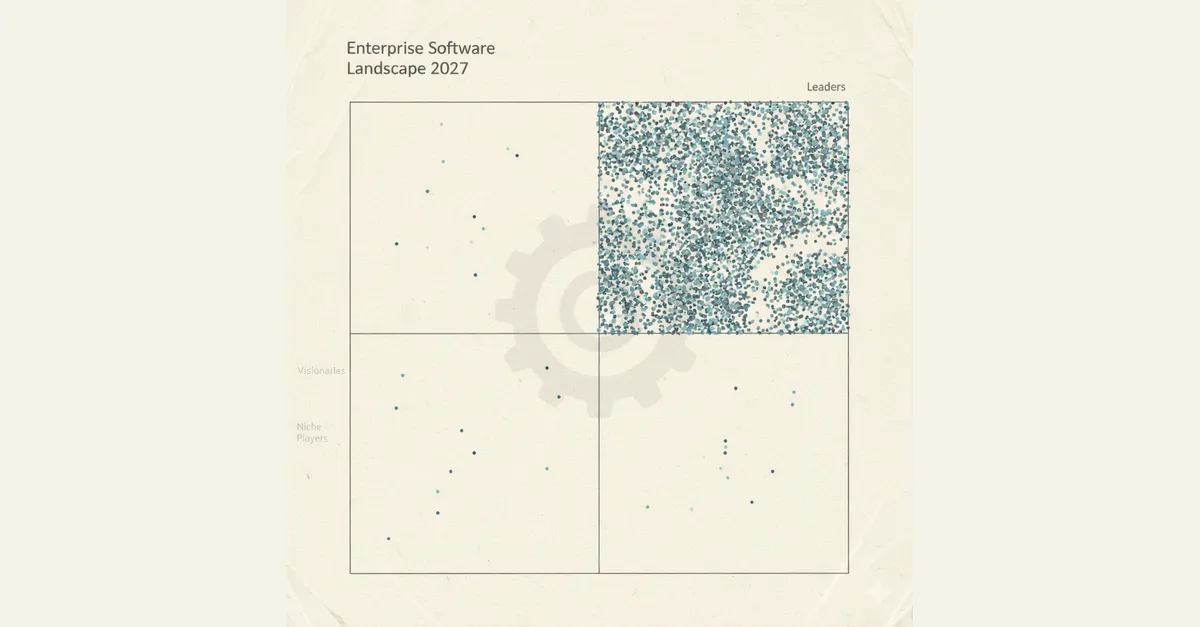
The Arc of Fragmentation: Speed vs. Scale
This balkanization will not happen uniformly. It will unfold in two waves.
Small and medium enterprises will move first. They are more cost-sensitive, less constrained by regulation, and more willing to accept operational risk in exchange for material savings. For them, the upside of a $10k per year AI-generated platform over a $200k per year incumbent SaaS product already outweighs the comfort of a “proven” ecosystem.
Large enterprises will move later. Heavier regulation, procurement inertia, and legacy complexity slow adoption. But delay does not equal immunity.
As clones mature and proliferate, large organizations will use their existence as a price floor, forcing incumbents into major concessions or full automation of their service models.
Inertia buys time. It does not restore leverage.
From Applications to THE Platform
The next three to five years will be the balkanization phase. A chaotic period where thousands of vendors offer near-identical capabilities.
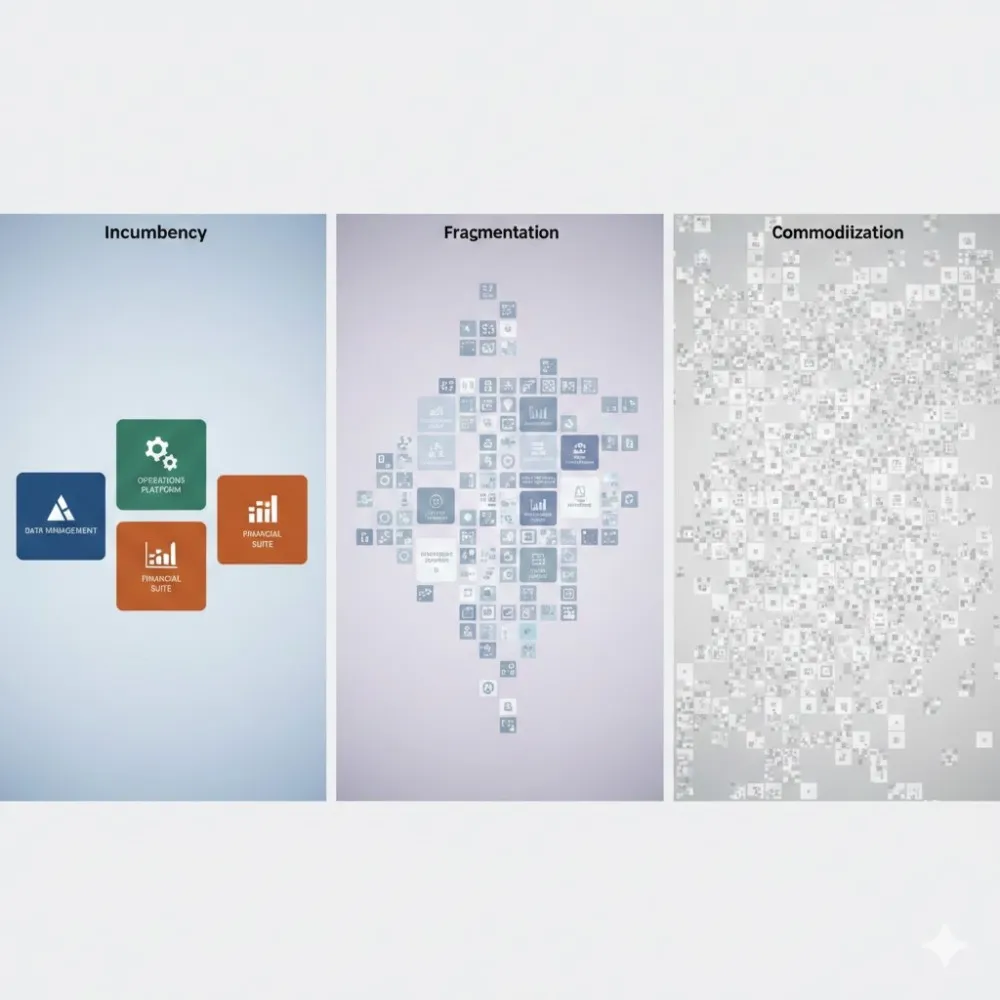
This is not the end state. It is a transition.
The likely destination is the rise of functional AI platforms. In this future, organizations do not buy applications as permanent assets. They own a central AI operating layer that can spin up CRM, ERP, analytics, or project management functionality on demand.
These systems will serve both proprietary workflows and standardized internal processes. Agentic software can assemble just-enough capability when needed, adapt it as requirements change, and discard it when it no longer delivers economic value.
Software becomes ephemeral infrastructure rather than a long-lived product.
Whether this consolidates into a few dominant AI platforms or a federated ecosystem remains uncertain. What is clear is that the high-margin, incumbent software vendor model does not survive the transition intact.
A New Decision Framework
Within three to five years, the defining question for IT leadership will no longer be about vendor roadmaps or long-term stability.
It will be a continuous economic triage of every business capability:
Buy: when regulation and accountability justify the premium.
Migrate: when a 95% clone delivers equivalent outcomes at a fraction of the cost.
Generate: when software, bespoke or commoditized, can be created on demand without permanent vendor commitment.
The most dangerous assumption in enterprise IT today is that applications are still the unit of value.
They are not.
Capabilities are. And capabilities can now be bought, cloned, or generated at will. Organizations that cling to the old vendor model will spend the next decade defending margins in a market that no longer respects them.